The Network is Back Up!

connecting-business-network-backgrounds-for-powerpoint“The Network is Back Up!”

By Stan Rieb

We have all experienced it.  It is a fairly common occurrence in our ever increasingly technologically connected world. Because it is our connection to the information we seek and a crucial path to the communication of our vision and purpose, a connection to the internet or “network” has become essential for many throughout the world. When that connection goes down, for many of us, our work comes to a grinding halt. But there is a small celebration once the network connection has been restored. Everyone in the office exclaims the same words, “The network is back up!”

As I travel around the Rocky Mountain Church Network, one question I always ask is, “How can we help you (the pastor) and your church?” Often the response goes something like: “Call us! Visit us! Connect with us!”

Since early this year, my focus in the region has been to be an IT Engineer seeking to restore and maintain Network Connection. There is a lot of work that still needs to be done, but please know my heart is to connect with the pastors and leadership of the churches in the RMCN.

When trouble shooting a network there are certain steps the provider must do and there are other steps the client can do. The provider must assure the client that the signal is reaching the router and that the router is functioning correctly.  The client is responsible to make sure that their end of things are connected properly, their cable is connected or their Wi-Fi is configured properly for connection.

As the provider we have to admit that we have not always done a good job. You need to know it is our desire to raise the reliability of our network.  We know we need to increase our up time.

As a member of the network we would ask that you help us maintain your connection. If we can help in specific areas (see the list below), please call.  If we can meet with you or the leadership of your church, please contact us.

 Connection Ports

  • Leadership Development
      • Learning Communities
      • Virtual Learning Communities
      • Pastor Coaching
      • Leadership Coaching & Retreats
      • Birkman Profile – Individual and Team Assessment and Coaching
  • Church Health
      • Ministry Mapping Church Assessment
      • Church Consulting
        • Life Cycle
        • Polity/Governance Development
      • Values, Mission, Vision training/development
      • MissionInsite Demographics
      • Conflict Resolution Coaching
      • Placement Resource
        • Pastoral Search Team Training
        • Criminal, Credit and Education background checks for pastoral and pastoral staff candidates
  • Church Reproduction
      • Church Planting
  • Other Resources
    • Guidestone Financial Services
      • 403(b) Retirement Program
      • Health Insurance
      • Financial Planning
    • Planned Giving Seminars
    • Church Insurance – Guide One


FBC Basin Installs New Pastor

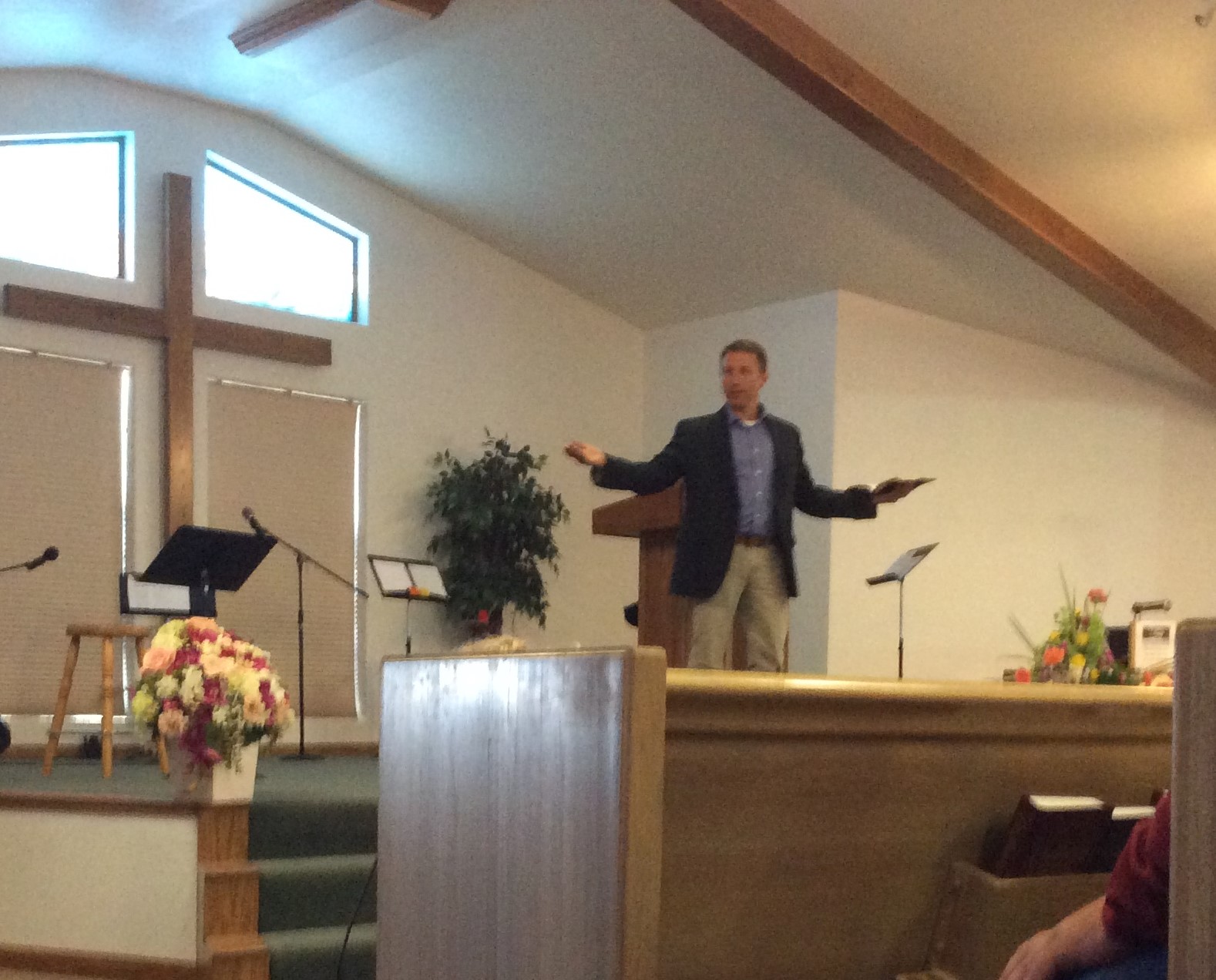
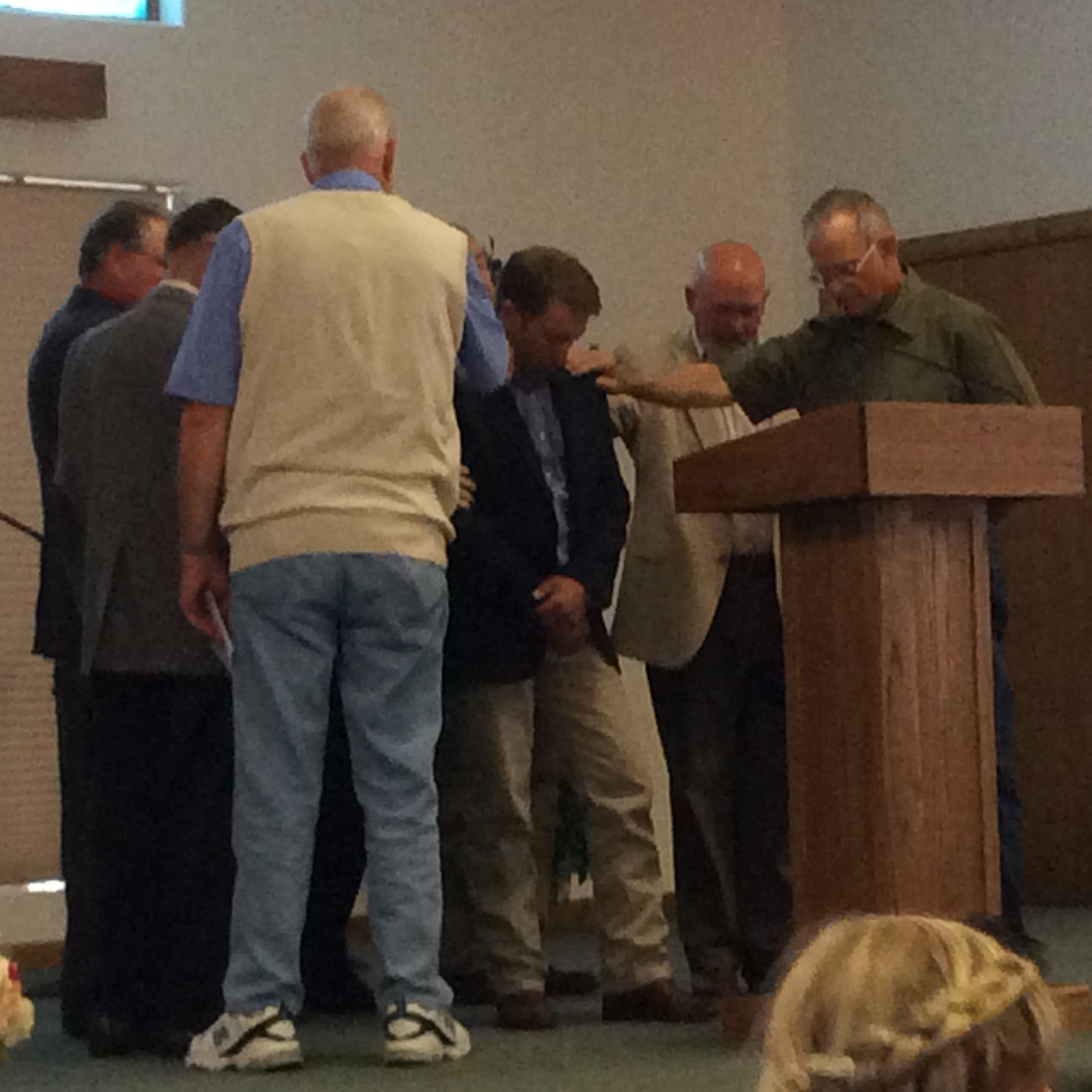
Aaron Gesch !First Baptist Church of Basin, Wyoming held an installation service for their new Lead Pastor, Aaron Gesch on June 26th.

Aaron Gesch 2Aaron lived 7 years in Peru (ages 5-12) with his parents who served as missionaries with Wycliffe Bible Translators. Before moving to Wisconsin to pursue a MA degree in Christian/Theological Studies from Trinity Evangelical Divinity School, with an emphasis in Counseling and Pastoral Care, Aaron and his wife Starla were living in Pinedale, Wyoming. The Gesch’s have 6 children.

Pastor Kent Dempsey is moving to an associates position after over 20 years as the Lead Pastor. He, and his wife Jan, are devoting more of their time caring for their aging parents. Kent will be available for pulpit supply in the area.

Associate Pastor, John Henderson, rounds out the pastoral leadership of First Baptist Church.


New Book on Becoming a Turnaround Leader

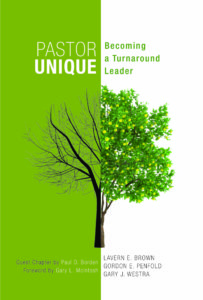
uniqueCovFINAL-203x300RMCN Board Member, Gordon Penfold, and co-authors, Bud Brown and Gary Westra have written a new book, Pastor Unique: Becoming a Turnaround Leader.  The publisher hasn’t given a firm release date yet, but they are hoping that it will be available around August 15.

You can read the Introduction by clicking on this link.

The authors are also working on additional resources for pastors, church leaders, and denominational leaders to help them get the most from this groundbreaking new work.


The authors of Pastor Unique understand the critical need for the development of turn-around pastor leadership, given that over 80% of churches in America are plateaued or declining in attendance. They bring their ministry experience and passion for healthy churches and effective leadership to bear on this epidemic. Their research of successful turn-around pastors has led them to identify the key behaviors and practices that non turn-around pastors can develop through assessment, training and mentoring. If you are a pastor facing the daunting task of leading a church that is plateaued and declining, Pastor Unique is a must read.

Stan Rieb
Executive Director
Rocky Mountain Church Network

An Introduction To Interim Ministry Training Event

1407859801


Interim Pastor Ministries will be holding a training event in Longmont Colorado on August 22 & 23, 2016.

This training is for Pastors interested in serving as an Interim, or exploring future ministry possibilities and denominational leaders wanting to learn about IPM’s unique, intention 5-stage process.

Attendance is a prerequisite for all interested in membership and serving with IPM. This training event is open to all. There is no constraint to join IPM.

The training will take place at:

Calvary Church
2101 Gay St
Longmont CO 80501

The cost for the training is $225 (Wives attend free)
All materials are included
No meals or lodging are included

Training Event Registration Form

The Missional Church

cropped-Indigenous-Ministries-Logo-shortBrother Stan Rieb and I had the privilege of sharing lunch together recently, and in the course of conversation, the comment was made that a certain municipality in Colorado now denies all church applications for building and expansion. I was struck with the fact that as I work overseas in Egypt, Iraq and Turkey, the very places where the Church originated, we find a very similar resistance in these areas today. In understanding church history, this resistance is not new. In fact as I look over the past 2000 years of extended Church history, the plight of Christians through the centuries, and our modern day partnering to plant and build churches in the Middle East, this is the norm.

For those who have a sense that we are owed some kind of privileged position due to being American Christians, it may be that we need to rethink our position. Rather than being surprised, shocked, or frustrated over such attitudes, let us be encouraged to look at our churches in a different light.

We are as U.S. Christians, really owed nothing, rather, the world asks us to give a reason for our validity. We can no longer grow the Church from the inside out, but we must assist people as they grasp the realities of a personal relationship with the Lord. He told us to be “salt and light,” and we are to continue to be a mainstream influence in our society, all in a culture that is growing more and more hostile to the truths taught in the Word of God.

We are seeing a culture shifting away from long held common beliefs, and have turned from a post-Christian nation to a pre-Christian nation. In fact, churches must adopt a missional outlook and perspective if we are to influence our communities. Before one becomes discouraged and feels confronted yet again with another “program” to be implemented, or how some other church reached “mega” status, let’s look at a few things that might help in assessing current direction, vision and actions.

I love Church history; not the one we were taught in Bible college and seminary that was primarily Western in its focus, but the dynamic growth and later decline of the Church in the Middle East from the first to the seventeenth century. The Church in the Middle East holds lessons for the U.S. Church today. How do we continue to influence in the midst of growing opposition as a Church engaged within the purposes that Scripture mandates?

Imagine for a moment that your church was in a foreign country, somewhat tolerant of Christianity, but not enamored with it either. How would you maximize your buildings, your congregation, your volunteers and your financial resources to effectively impact your “foreign community?”

Take a moment and think through this. When a missionary goes overseas and when all the excitement of support raising has been accomplished, and all the adventure of travel and settling into a new country has begun to sink in, he or she eventually comes to the question which I remember asking of myself in India, “now what?” It is from that question that one derives all future passion, vision and activity. It is one of personal and ministry assessment, and it is also what the Lord asked Moses in Midian when he stood before the burning bush, “What is in your hand?”

Pastor, what is in your hand? How can this be invested in taking your church into your community and being an influence for good? I’ve seen two churches standing side by side, one holding activities such as hiking clubs, MOP’s, day care, senior citizen lunches, community and political meetings, men’s BBQ’s, softball and basketball league participation, little league, and community road and parks clean up. This church I’m describing is seen as an asset to the community, contrasted with the neighboring church that never sees a car enter the drive until Sunday AM. As we look at a less than welcoming community, 1 Peter 2:12 reminds us to, “live such good lives among the pagans that, though they accuse you of doing wrong, they may see your good deeds and glorify God on the day he visits us.”

A Church looking exclusively at herself and her own ministries is in the beginning of a decline that, given enough time, leads to nonexistence. We’ve all been brought to tears when one of our own precious children trusts Christ as Savior; as wonderful as this is, let’s not be satisfied with this alone, but just as a missionary worth his or her tenure overseas diligently ministers in outreach, we too must actively seek ways to influence our community for Christ.

This influence requires vision and action. What is your vision for your community? Is it so big that God has to show up? Faith begets faith. The greatest affect for change is when people see genuine faith in action because of strong vision. Every man I know wishes for a moment when he can be a hero and make a strategic shift and positive change in someone’s life for good. Christ designed his bride to be his hands and his feet, in other words, you and I, the Church itself, are real life heroes reaching our neighbors with His love and forgiveness.

What is the Church to produce? Chevy makes cars, Cross makes pens, Harley-Davidson makes motorcycles (thank you, Lord). So the question then is, “what is the church to produce?” The Church produces new Christ-followers who become disciples. If we’re not accomplishing this, we’re not doing our job.

The beginning of the decline of the church in the Middle East was around the 13th century. Of course it was partly the result of a growing persecution of Christians by Islamic communities, and their rulers. Up to this time the Islamic communities had blended, accepted and in fact, interlaced Christians into their socio-political and economic societies. During the 13th century we begin to note a decline in influence and connection the Church held within the blended communities, a declination caused not as a result of outside pressure, but, rather, from inside the Church herself.

Pastors and bishops gradually exhibited a lack of academic engagement in Scriptures, passing this on to the Church. In other words, the Church began to “do ministry” because of traditions rather than reflect a vibrant interest in the Word of God, its vital truths and its impact on society and the human heart. Ultimately this attitude produced a lack of interest in reaching out to the unsaved. Believers became satisfied with passing on their faith primarily to their own children and family “dynasties.”

The decline of the Church from the 14th through the 17th century in the Middle East was first, persecution, of course, but a third underlying cause was also lack of vision for reaching out. Because of religious and political pressures, they choose compromise as an alternative and accepted marginalization within their communities rather than retain the role of vibrant changeagent. Families passed their faith on to their own family rather than reaching out.

In contrast, within the first century, despite growing persecution, the message of Jesus Christ exploded along the trade routes of both the Roman and Persian world, especially along the Silk Road to India and China. As an example, the Gospel, brought by merchants from Jerusalem, reached Mosul in Northern Iraq in 38 A.D. mixing the concepts of business and mission. In fact, one of the early hymns the Church in the East was “let us take the attire of merchants and bring the good news to the world.”

The decline of the modern Church is directly linked to the abdication of engagement in her communities through the daily influence in the lives of neighbors and co-workers, to accomplish what Christ commanded her to do, make disciples. When the Church is singularly focused on itself and fellowship, she loses her influence in society and the outcome is marginalization.

My dear friend, an Iraqi pastor, Douglas Bazi, has been shepherding a church of refugees from Mosul. Two years ago as Mosul fell, he was captured by ISIS, tortured and beaten many times. He was taken to be beheaded a number of times, but as he said, “the Lord has always been with me and watched over me.” After four months, miraculously, he was released and immediately resumed his role as pastor shepherding his flock who were now refugees in nearby Irbil, northern Iraq. Refusing to leave his flock, he has worked tirelessly to emigrate his congregation of over 200 families in the Czech Republic. His key leadership and life example have impacted thousands. Without pastoral leadership and a localized focus upon the people of our communities, the church will flounder.

So what are some action points to consider?

1. The Church needs a missional heart. Let’s not focus on what we want our community to do for us, but what we can and will do for our community.

2. The Church needs to be practical as Moses was when God asked him, “What is in your hand?” God knows our flaws and weaknesses and still chooses to work through us for His glory, and He will take the mundane and make it miraculous and pertinent.

3. The Church needs to be actively stepping into the mainstream of her community.

4. The Church needs to take courage and stand firm in her faith and confidence in the teaching of the Word. We’ve seen all that Satan can throw at us; this is nothing new. Yet the Church still stands because she is founded upon the immovable foundation of Christ and the eternal Word.

The Lord said, “I will be with you, to the very end of the age.” We may not all teach and preach well, but we can each make disciples, and as authentic, passionate Christ-followers we are linked to the ongoing pulse and unfolding history of the Church that is being made today.

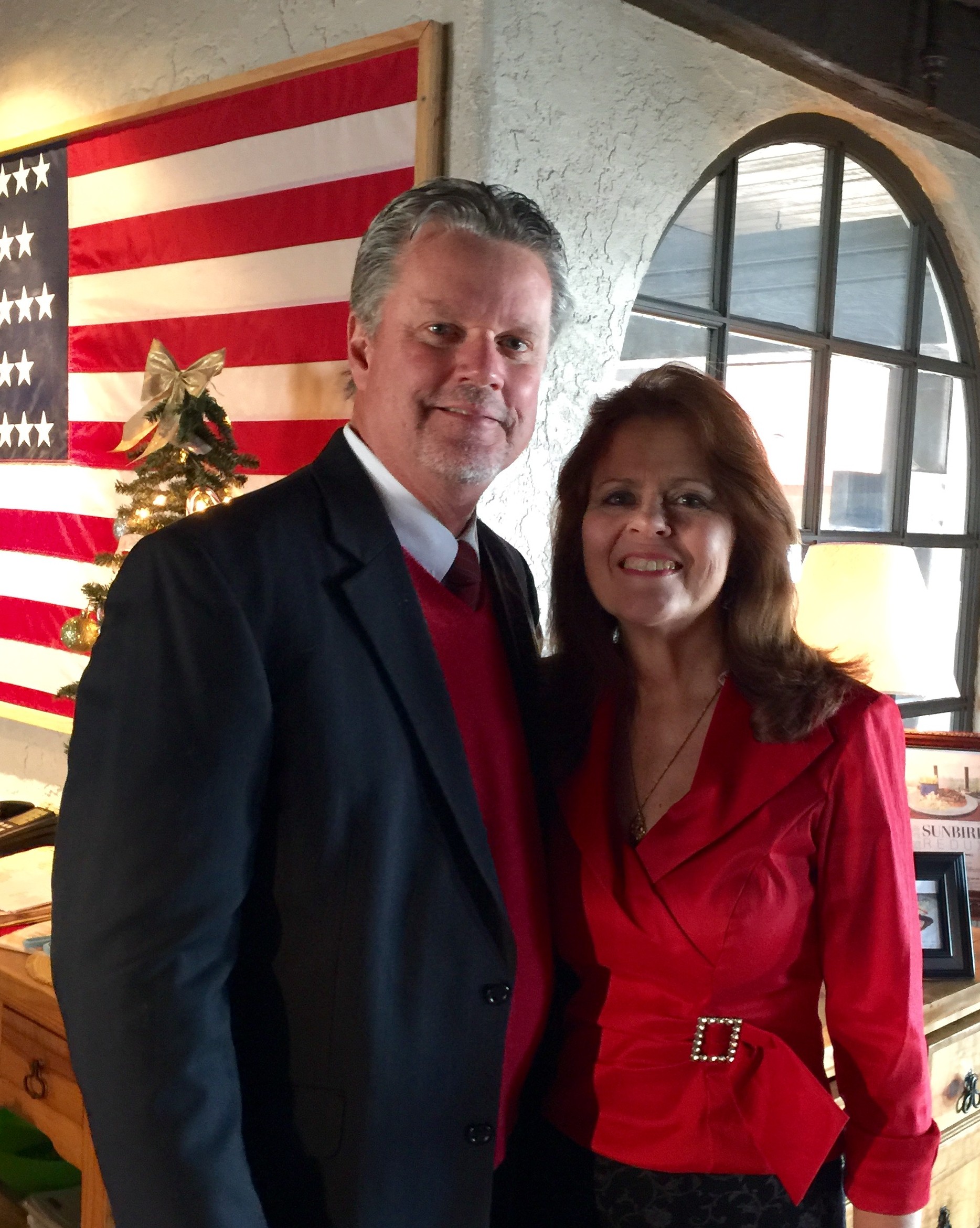
John CookBy John W. Cook, CEO, Indigenous Ministries

www.IndigenousMinistries.org


Photo of John and his wife, Dee

A Heart For Commerce City

Prayer Station #2Good News Community Church has a heart to reach people apart from God in North Denver.  With a mission to “be and make disciples of Jesus Christ who love God, love others, and serve the world.”

Their multi-campus ministry focuses primarily on impacting Broomfield and Commerce City.  Lead Pastor Matthew Fite and Commerce City Campus Pastor Ryan Whitson lead a community of owners of a God shaped and sized vision to reach their communities.

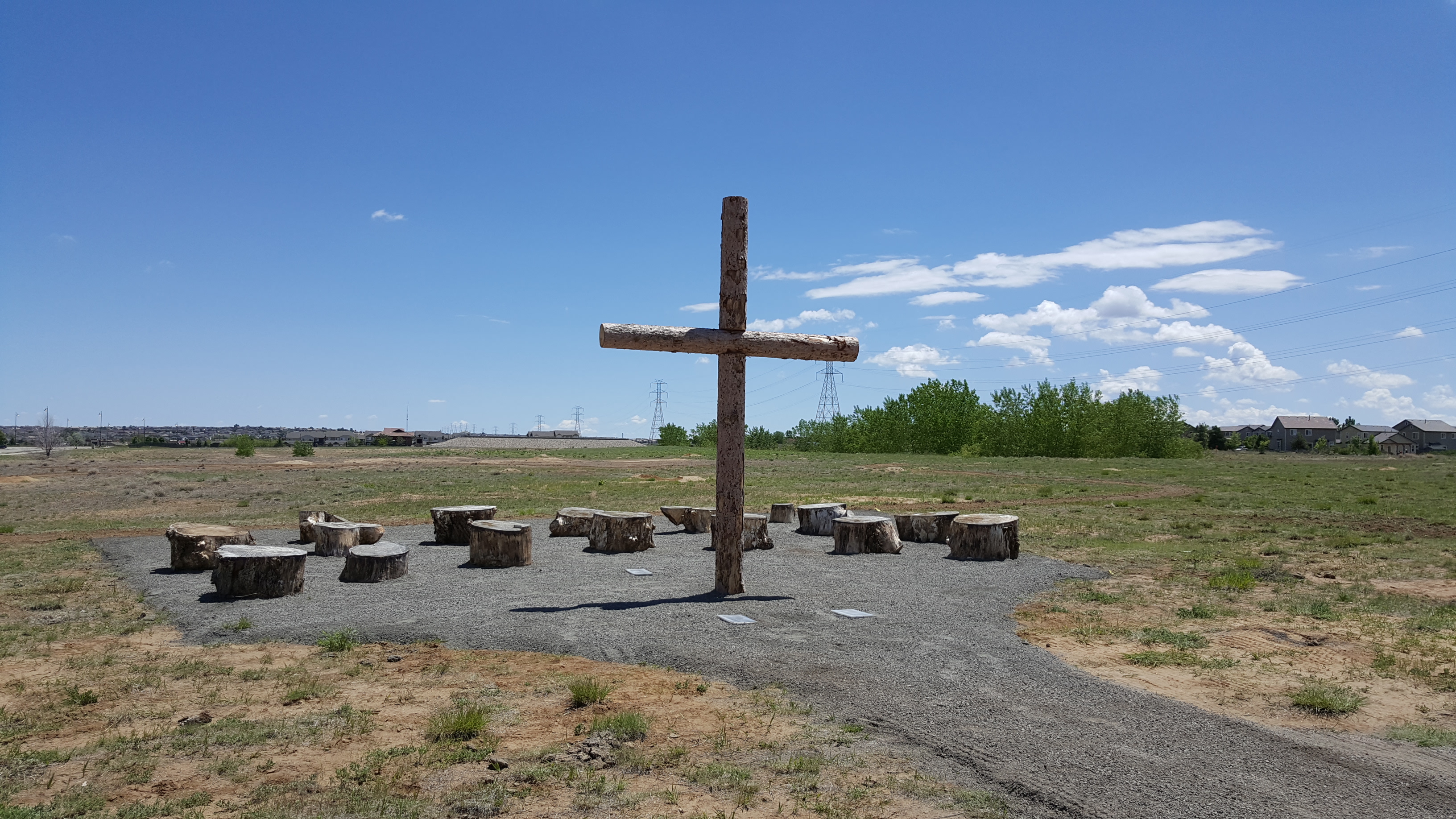
The church owns property at 104th and Blackhawk which is a prime spot for reaching northern Commerce City.  Recently they placed a cross, seats, and a set of solar lights on the Commerce City land.

On Sunday, June 5th the Commerce campus had service out on the land – it was a special day!

They spent the morning praying for the city of Commerce, for the future of the church, and for God to use them as a vehicle for thousands of men, women, boys, and girls to come to know Jesus as Lord and savior… in Commerce and across north Denver.

It was a good day!

Why have we grown?

cothlogo11Recently, we have enjoyed a period of growth.  Twelve people have joined our church since the first of the year, ranging in ages from 10 – 65 years old, and four more are considering joining.

For our small church this has resulted in a 10% growth in membership and a 9% growth in attendance.  Plus, this Sunday we will be baptizing a young woman in our worship service.

A couple of months ago, two young men accepted the Lord Jesus downstairs in our Sunday School while their grandmother upstairs in worship rededicated her life!  Obviously the Holy Spirit was working on both floors that day.   Last Summer we baptized a family of four who are mostly new to the faith.

Why have we been experiencing this growth?  I can’t really say except we are being faithful to our vision of being living messengers for Jesus who share God’s love with others in all of our ministries.

A little over a year ago when we changed the name of the church, we had two prayers and goals in mind:  1. We desired to attract non-believers to our church. 2. We desired to attract believers who had recently moved into our community.

God has certainly honored both those requests in these new members.  I am pleased God has blessed our focus on vision and outreach.

Pastor Mike Lundberg,
Church on the Hill,
Montrose Colorado.

One Day Conference 2016

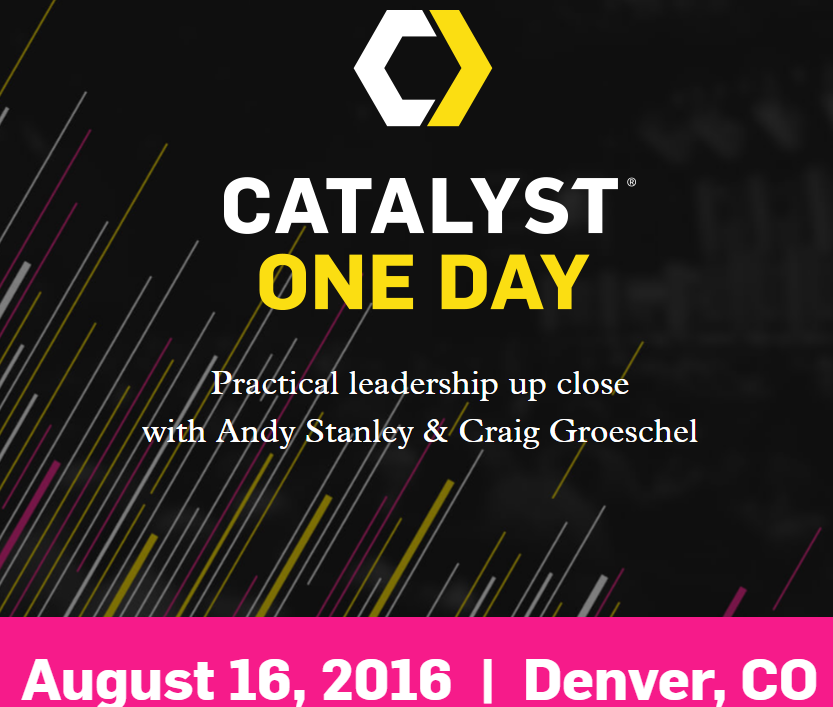
CatalystOn Tuesday, August 16, One Day Conference: The View From Here will be in Denver, Colorado from 8:30-4:30.

Two key questions remain at the forefront of every leader’s mind: Where have we come from? Where are we going?

After recently celebrating their 20-year anniversaries in ministry, Andy Stanley and Craig Groeschel are sharing The View from Here by reflecting on the leadership lessons that have brought them to where they are today and looking ahead to the future of the Church with excitement and anticipation.

One Day is a can’t-miss opportunity to unpack the nuts and bolts of leadership with the two principal voices in leadership today. Catalyst One Day is a different type of Catalyst event that is designed to focus on answering the practical how-to and what-about questions we just aren’t able to cover at a larger event.

Learn from two of the most effective voices in organizational leadership today, Andy Stanley and Craig Groeschel, as they share the lessons they have learned in growing their ministries and developing as leaders over the past 20 years.

The conference will be at:

Cherry Hills Community Church
3900 Grace Blvd
Highlands Ranch, CO 80126

Conference Schedule

August 16, 2016
7:30 am  – Registration
8:30 am – Session 1
10:00 am – Break
10:30 am – Session 2
12:00 pm – Lunch
1:30 pm – Session 3
3:00 pm – Break
3:30 pm – Session 4
4:30 pm – End of Day

Register with RMCN to get the group rate of $89 per person by filling out THIS FORM and mailing it along with your check to:
RMCN
3686 Stagecoach Rd Unit E
Longmont CO 80504
Or if you want to pay by credit card use the following link:


If you have any questions, please call 303-772-1205 or email Assistant@rmcn.org.

A Letter to the RMCN Family

Dear Rocky Mountain Church Network Family:   As chairman of the RMCN board I’m writing this letter on behalf of our Regional Executive Director, Stan Rieb, and the RMCN.   The RMCN supports regional churches in many ways.  The RMCN vision is: We envision a network of vibrant churches empowered by God and mobilized by passionate spiritual leaders, living out the gospel by serving their communities and making disciples of Jesus Christ to the glory of God.

Thus RMCN provides guidance and resources for pastoral searches, assessments for churches, ministry mapping, coaching for pastors, leadership learning communities, counseling and resources for struggling churches and pastors, and organizes the occasional regional leadership retreat for pastors, staff and their wives.

All of this boils down to one goal: to produce healthy and vibrant pastors and churches.  Stan is at the center facilitating the mission and has made great progress this past year in contacting and encouraging member churches.

My church has been the recipient of Stan’s expertise and is now experiencing growth in several areas for the first time in four years.   In our meeting last week, however, Stan informed me that we had to dip into our investments.  As a board we knew this day was coming but feel fortunate to have reserves to draw on.

So as a member church, I am asking you to consider a one-time financial gift, increase your current financial commitment or placing RMCN on your missions and outreach budget.  As you invest in RMCN, you are investing in God’s kingdom work in our region.     Please keep Stan and RMCN in your prayers.  May God richly bless you as you seek to make disciples through sharing and living out the gospel.

Sincerely in Christ,
Pastor Mike Lundberg
Chairman of the RMCN Board
Senior Pastor of Church on the Hill, Montrose, Colorado